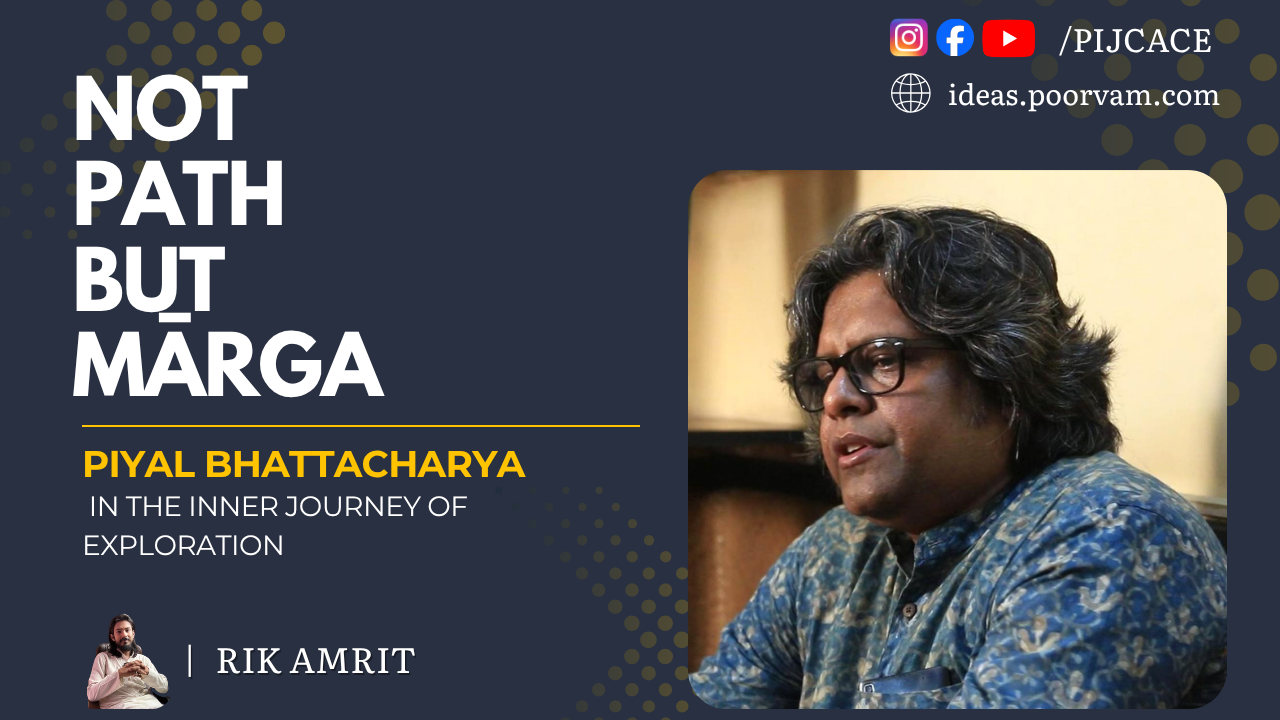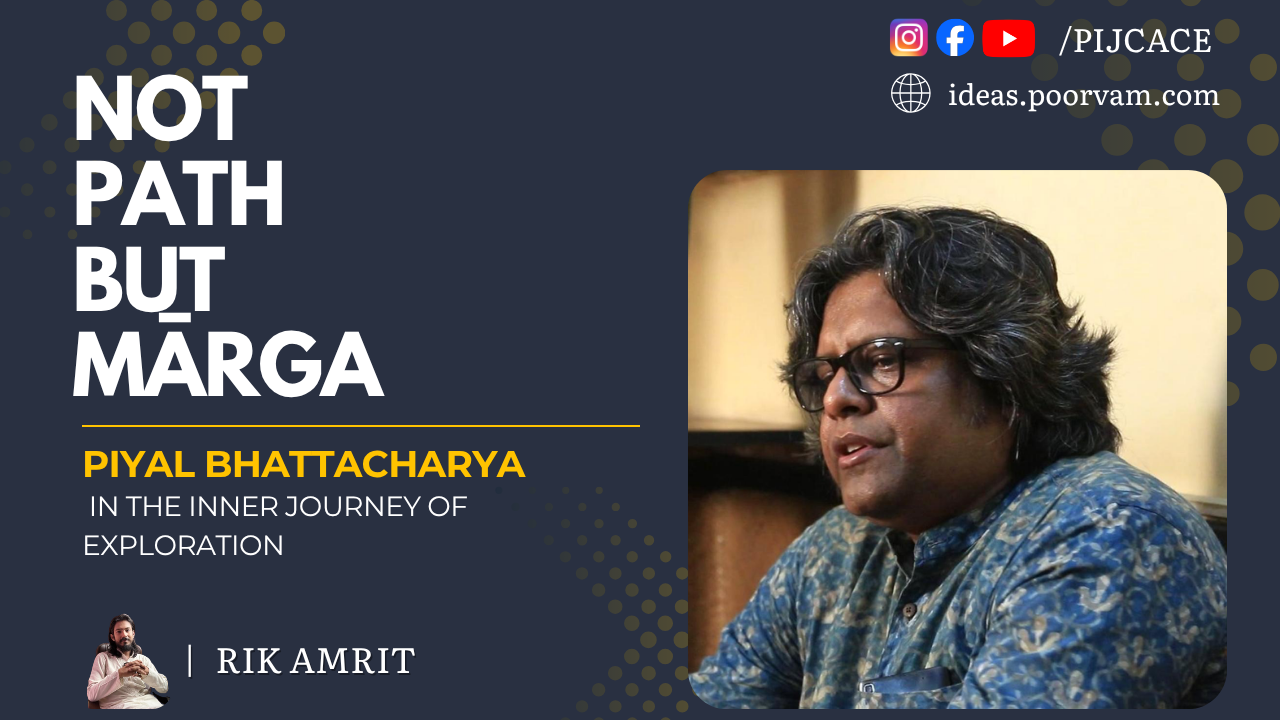
Not Path, but Mārga: Piyal Bhattacharya in the Inner Journey of Exploration (Part 1)
This interview presents a sustained dialogue with Mahāmahopādhyāya Piyal Bhattacharya, founder of Chidākāśa and originator of the concept of Mārga Nāṭya, on the theoretical and practical foundations of his performance methodology grounded in Bharata's Nāṭyaśāstra. Framed within the Indian epistemic mode of sākṣātkāra rather than journalistic interrogation, the conversation explores the etymological distinction between mārga and patha to articulate an unfixed, seeker-driven path of artistic pursuit. Central to the discussion is the concept of bhāvānukīrtana, a method of reviewing and re-manifesting inherited tradition rather than inventing novelty, illustrated through Bhattacharya's engagement with Kathakali, Kalaripayattu, and Kūṭiyāṭṭam. The interview further examines the construction of a five-layered pyramidal stage for Saugandhikāharaṇam as an embodiment of trans-epochal consciousness, alongside reflections on metaphysical fullness, the rejection of synthetic materials in performance, artistic independence from institutional grants, and Bhattacharya's ancestral connection to Mahāmahopādhyāya Haridās Siddhāntavāgīśa. The dialogue closes with a meditation on the limits of instruction in transmitting śāstric knowledge.

The word “interview,” as journalists use it, is not understood in quite the same way by seekers. For them, interview — or sākṣātkāra — signifies the direct experiential realization of the essential nature of the (supreme) truth, as its witness. The poet says that such experience occurs in meditation. I have also heard of another way: through the instruction of one who has already had that direct encounter. The Indian method of receiving such instruction is the Upaniṣadic way — to situate oneself before the Guru in the disposition of a supplicant.
In journalism, both the question and the answer tend toward specificity, driven by the desire for precise information. In contrast, perhaps shaped by Indian disposition, my questions are many. I am not a journalist, but a śiśikṣu — a learner-disciple. I sit in the presence of my Ācārya,
Continue reading this article
You've reached the end of the free preview. Create a free account — or log in — to read the full piece.
- Unlimited access to every article
- Highlight, annotate & listen
- Comment & join the conversation
- Curated reading list & bookmarks
Free forever · No credit card required · Privacy Policy